


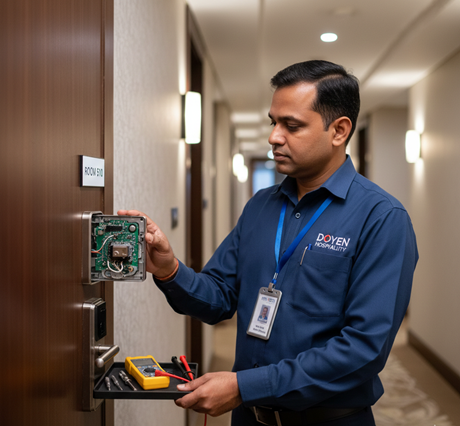
With AMC & Without AMC – A Practical Guide for Hoteliers
In modern hotels, guest door locks are not just hardware.
They are critical to security, guest trust, operational efficiency, and brand reputation.
Whether a hotel operates with an Annual Maintenance Contract (AMC) or without AMC, maintaining lock health is essential to avoid failures, guest complaints, and revenue loss.
This blog explains best practices for both scenarios in a clear, systematic way.
Why Guest Door Lock Health Matters
A poorly maintained door lock can lead to:
- Guest dissatisfaction
- Room access failures
- Security risks
- Emergency lock replacements
- Negative online reviews
A well-maintained lock system ensures:
- Smooth guest check-in experience
- Reliable access control
- Longer hardware life
- Lower long-term maintenance cost
Understanding AMC vs Non-AMC Maintenance
Before diving into maintenance methods, let’s clarify the difference.
What is AMC?
AMC (Annual Maintenance Contract) is a professional service agreement where the lock provider or authorized partner maintains the system regularly.
Without AMC
Maintenance is handled internally by hotel staff or on a call-basis when problems arise.
Both approaches can work — if managed correctly.
Keeping Guest Door Locks Healthy – WITH AMC
Hotels with AMC enjoy preventive and professional care.
Key Maintenance Practices Under AMC
- Scheduled preventive maintenance visits
- Firmware and software health checks
- Battery performance monitoring
- Mechanical alignment inspection
- Emergency breakdown support
- Genuine spare part replacement
Advantages of AMC
- Reduced downtime
- Predictable maintenance cost
- Expert handling
- Faster issue resolution
- Extended lock lifespan
Best Practices for Hotels with AMC
- Ensure timely service visits
- Maintain service logs
- Train staff to report early symptoms
- Use only authorized service providers
Keeping Guest Door Locks Healthy – WITHOUT AMC
Hotels without AMC must rely on discipline, staff training, and routine checks.
Daily & Weekly Practices
- Check door alignment and handle smoothness
- Ensure card/mobile access works correctly
- Inspect physical damage or loose screws
- Monitor battery alerts on PMS or lock software
Monthly Practices
- Replace batteries proactively
- Clean lock surfaces with dry cloth
- Check RFID reader responsiveness
- Test emergency mechanical keys
Staff Training is Critical
- Train housekeeping to report early issues
- Train front desk to recognize access errors
- Keep a basic troubleshooting checklist
Common Signs of an Unhealthy Guest Door Lock
- Delayed card reading
- Frequent battery alerts
- Handle stiffness
- Guest complaints about access
- Door not auto-locking properly
Early detection saves cost and reputation.
AMC vs Non-AMC: Maintenance Comparison
| Parameter | With AMC | Without AMC |
|---|---|---|
| Maintenance Type | Preventive & professional | Reactive & internal |
| Cost Structure | Fixed annual cost | Variable & unpredictable |
| Breakdown Risk | Low | Medium to high |
| Response Time | Fast & guaranteed | Depends on vendor availability |
| Hardware Life | Longer | Shorter if neglected |
| Staff Dependency | Low | High |
Best Recommendation for Hoteliers
- Luxury & high-occupancy hotels → AMC is highly recommended
- Mid-scale hotels → AMC or structured internal plan
- Budget hotels → Strict routine checks if no AMC
In all cases, ignoring lock maintenance is never cost-effective.